Counterfeiters Take the Podium: Milano Cortina's Scam Problem

Jesse Xu
CTO

Latest
Industry News
The Milano Cortina Playbook
The Milano Cortina Winter Olympics just ended, and thousands of fans got scammed trying to buy merchandise.
Cybersecurity firm Bitdefender uncovered a coordinated network of fake websites impersonating the official Olympic store. The operation ran fraudulent Meta ads promising up to 80% off, redirecting people to lookalike sites that harvested payment info, addresses, and login credentials. Victims either got counterfeit products or nothing at all.
The scale was wild. Multiple fake domains registered days apart, promoted through newly created Facebook pages, designed to rotate fast and disappear before anyone could do anything about it. Most sites vanished within hours of processing payments. No refunds, no recourse.
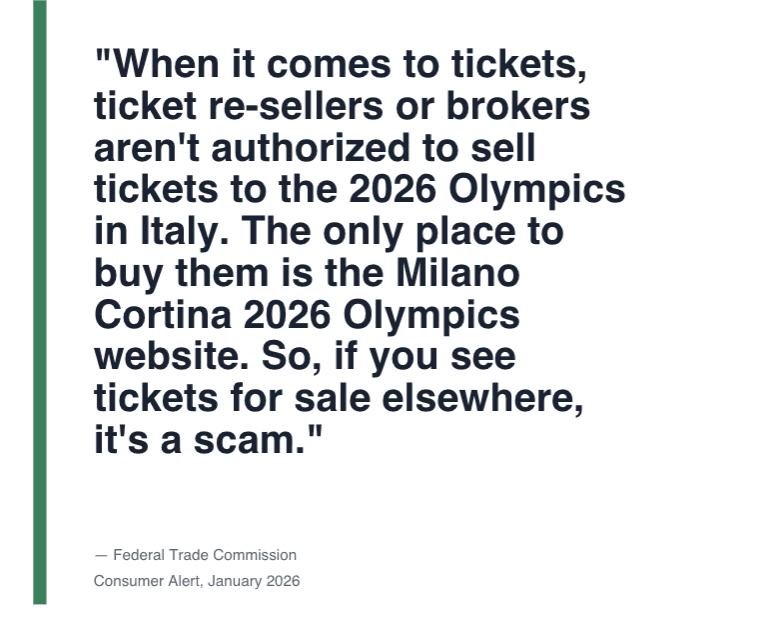
The problem got so bad that the FTC issued a consumer alert in January warning travelers about Olympic scams– fake ticket sites, fraudulent hotel bookings, counterfeit merchandise stores. But by the time that the alert went out, the scams were already running at scale.
This wasn't some one-off scam. It's the playbook.
How Modern Scams Work
What makes the Milano Cortina scams interesting is how they show the full playbook of modern counterfeiting:
1. Fraudulent paid advertising
The scams ran on Meta ads to drive traffic. The ads used stolen Olympic branding and product photos to look legit, targeting people searching for official merch. They looked professional because they were literally copying official marketing materials.
This creates a double problem for brands: counterfeiters aren't just stealing sales, they're stealing ad spend. Your marketing drives awareness, fake ads capitalize on it.
2. Lookalike websites
The fake sites weren't obviously scams. Identical product photos, same color scheme, same branding, same merch collections. The only tells were subtle: "Sign up and save 80%" instead of "Sign up and save 15%," domain names that were close but not exact.
For customers searching for official merch, these sites looked legitimate. By the time people realized something was wrong—order never shipped, charged twice, product quality was terrible—the site had already disappeared.
3. Coordinated infrastructure
Bitdefender found that fake domains were registered days apart—coordinated infrastructure built to rotate fast. Standard practice for large-scale counterfeit ops. One domain gets taken down, three more are already live.
Speed is the problem. Traditional brand protection (manual monitoring, Excel reports, two-week response times) can't keep up. By the time a fake site comes down, the operation has already processed thousands of transactions and moved to new domains.
Why Events Are Prime Targets
The Olympics aren't special. Any major event with time-sensitive demand creates perfect conditions for counterfeiting:
Limited-time urgency. Fans want merch now, not after the Games end! Urgency makes people less careful about checking domains or seller legitimacy.
High search volume. Millions of people searching the same terms makes paid ads incredibly effective. Counterfeiters can outbid legit sellers because their margins are pure profit—no manufacturing, no licensing fees, no quality control.
Guaranteed demand. Official merch sells out or has limited availability. Counterfeiters fill that gap with fake inventory that ships from China weeks later. If it ships at all.
Same pattern every time:
Product launches (streetwear drops, limited releases)
Fashion weeks (knockoffs within 24 hours)
Holiday shopping (Black Friday, Memorial Day)
Viral moments (TikTok trends, celebrity endorsements)
What Brands Need to Know
Three things the Milano Cortina scams make clear:
Speed matters more than volume
Doesn't matter if you eventually take down 1,000 fake listings if each one stays live for two weeks. During that window, counterfeiters are processing transactions, harvesting customer data, damaging your brand. The FTC alert came out in January—weeks before the Games ended—but the scams were already running at scale.
Real-time detection and same-day enforcement should be baseline, not premium.
Multi-platform monitoring is non-negotiable
Milano Cortina hit fake ads, fake domains, and social media simultaneously. Brands that only monitor marketplaces or only monitor domains are missing half the problem.
You need comprehensive coverage: e-commerce platforms, paid ads, standalone websites, social media, app stores. Counterfeiters don't limit themselves to one channel.
Manual processes don't scale
Coordinated ops like Milano Cortina rely on speed and volume. Dozens of domains, hundreds of ads, thousands of transactions. No team of human analysts can review that fast enough to matter.
Automation is essential. AI-powered detection scans millions of potential infringements daily, flags high-priority threats immediately, enforces takedowns at scale. What used to take weeks of analyst hours happens in hours.
Bottom Line
The Milano Cortina scams will fade from headlines. The tactics won't. The infrastructure is already being repurposed for the next major event, the next viral product, the next brand with high demand and limited supply.
The Milano Cortina organizers told Reuters they "are aware of unauthorised websites that misuse the Games brand and these are promptly reported to the relevant authorities." But "promptly reported" isn't fast enough when sites disappear within hours of processing payments.
For brands facing counterfeiting at scale, the question is whether you'll catch it before it costs you customers and revenue. Speed and automation aren't nice-to-haves. They're baseline.
Podqi's AI-powered platform monitors 100+ marketplaces and detects fake domains, unauthorized ads, and counterfeit listings in real time. Read more here.